
Before the Battle
The Battle
Gonzales
-The Alamo-
Goliad Campaign
Before the Battle
April 21st, 1836
Commanders of the Field
Timeline of Events
Weapons
Fate of Nations
Alamo is the Spanish word for "cottonwood", but today it translates as: "willing to fight for your beliefs" in many languages.
San Jacinto Museum of History © 2003

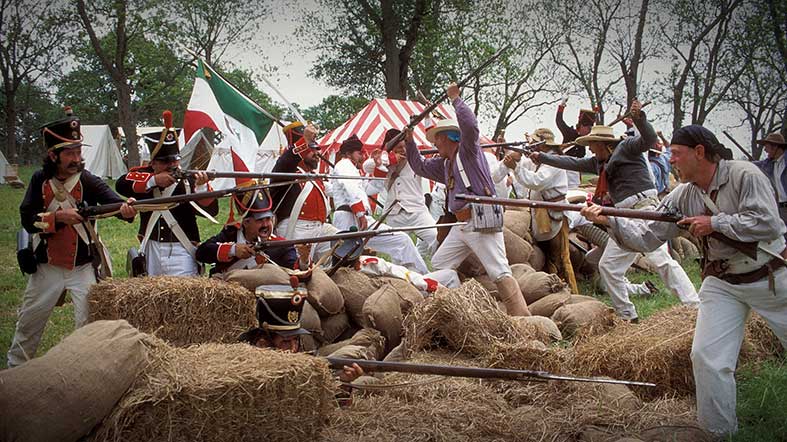
The Siege of the Alamo is the most famous fight in Texas history, though not its most decisive. In 1836, around 225 Texas revolutionaries sacrificed their lives defending a post they believed essential to their cause. For many Americans, and most Texans, the Alamo is a symbol of patriotic sacrifice, bravery and loyalty.

In December of 1835, Texian revolutionaries had taken the city of San Antonio de Béxar from Mexican Centralist troops. Defending one of the main roads from the interior of Mexico to the American colonies, it was—after much debate—deemed worthy of defense. Within the city stood its mission, known as the Alamo.

It was the town’s strongest fortification.

In all, around 225 colonists were at the Alamo under the dual leadership of Col. James Bowie and Lt. Col. William B. Travis. The defenders resolved to offer as thick a barrier as possible between the Mexican government and their colonies up the road.

Their resolve was tested on February 23rd, as Santa Anna’s Army—eventually swelling to 2,500—arrived in Béxar to enforce government policy. When Santa Anna sent a courier demanding the Alamo’s surrender, Travis replied with cannon fire.

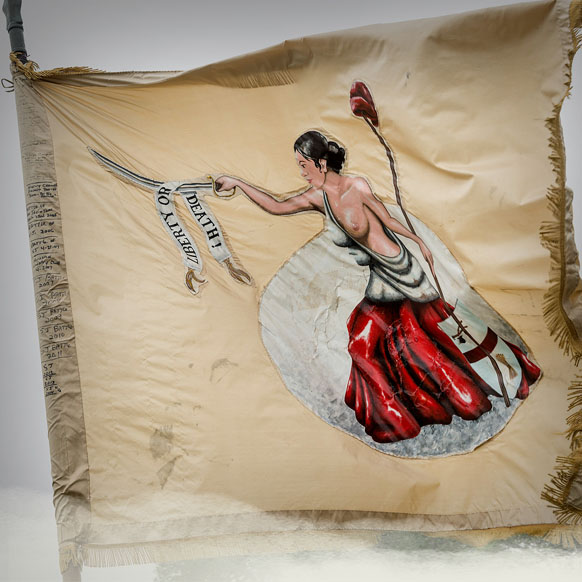
Correspondence swiftly left the Alamo by horseback. “The enemy in large force is in sight”, Travis wrote in a message to Gonzales, “We want men and provisions. Send them to us.” Vowing to never surrender or retreat, he pledged: “Victory or Death!”

But help would not come.

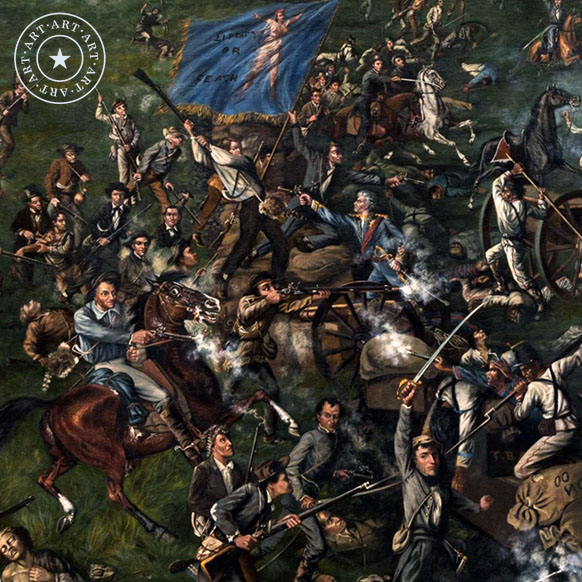
Santa Anna’s forces lay siege to the Alamo for 12 days before a final assault on March 6th when 1,800 Centralist troops stormed the walls in service to their government. Travis was among the first to die. Jim Bowie, in bed with pneumonia, was also among the fallen. All Texian fighters were killed or executed, taking about 600 Centralists with them.

Santa Anna treated the women and children with honor and respect. He provided passage through his lines, as well as giving each a blanket and two dollars (a sum significant enough to travel on at the time).

The Alamo defenders remained at their post, fighting for Texas Independence until the last and buying time for the young government to organize. Their memory fueled spirits on the Battlefield of San Jacinto, and beyond—inspiring courage in Americans in any situation demanding patriotic sacrifice.