
The Goliad Campaign of 1835 started as an initiative by General Martín Perfecto de Cos to regain control of ports along the Texas Coast. But it ended with the fall of San Antonio de Béxar, setting the stage for action at the Alamo and San Jacinto.
Texas port cities have always been key to its military control. In fact, had leaders of either side of the Texas Revolution taken full advantage of their naval resources, the events of 1835-1836 would have unfolded differently.
 |
 |
 |
 |
| Abishai Dickson lost his life at Goliad |
 |
 |
 |
| San Jacinto Museum of History © 2003 |
 |
 |
 |
 |
 |
 |
 |
 |
In 1835 Copano was a key port, giving entry inland to San Antonio. Between the port and San Antonio stood Goliad, guarding the supply line between the two. Originally known as the presidio La Bahia, Goliad reflected major political changes occurring in Mexico.
In 1834, General Antonio López De Santa Anna ascended to the Mexican presidency. He led a movement, known as Centralists, which desired establishment of a supreme central government. In Texas, this was not good news.
Previous policy regarding Mexico's northern territory was established in the Mexican Constitution of 1824, and explicitly limited the powers of the central government. Defenders of this original agreement, including the Texas colonists, were known as Federalists.
In 1835, the Centralist government planned a major campaign to enforce its policies in Texas. General Cos was to land at Copano and eventually secure the region. To prepare, the colonists in both Goliad and Copano were disarmed. And on September 20th, Cos arrived.
He entered Goliad on October 1st with an honor guard of 30, over 400 infantrymen and a unit of local rancheros. Four days later, he marched almost the entire force to San Antonio, leaving only 75 troops at Goliad.
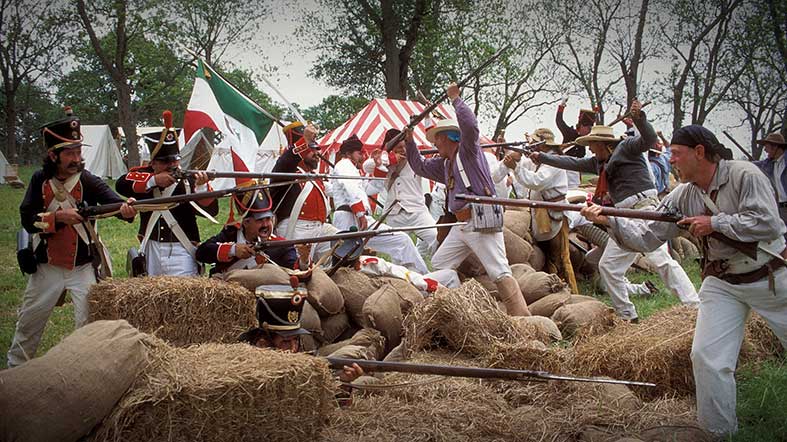
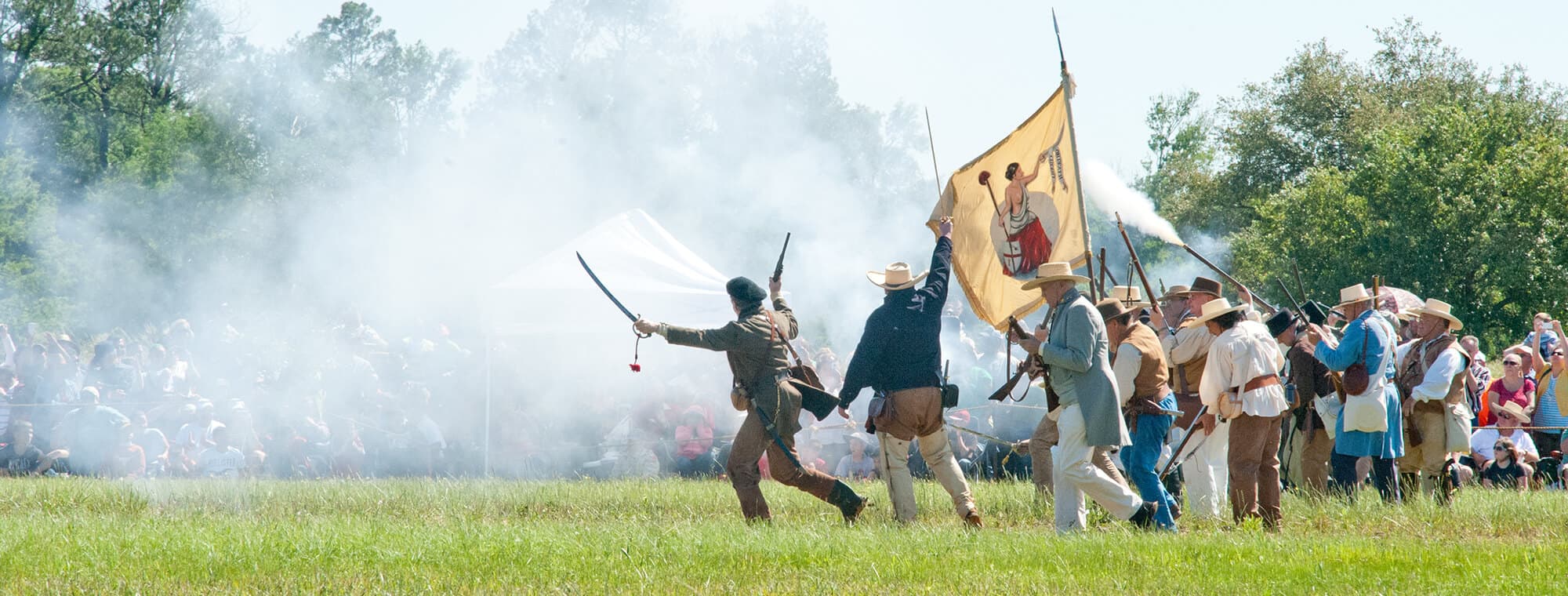
While General Cos marched to San Antonio, Federalist volunteers organized to resist the military occupation. On October 9th, the Federalists captured the fort and most of its defenders. Three Mexican soldiers were killed.
The Texian capture of Goliad gave them a huge strategic advantage in the region. It also solidified the gap between colonists supporting the Constitution of 1824, and those remaining loyal to the Mexican government. And it served as a test run for the arrival of the engagement with Santa Anna's troops shortly thereafter.
The Goliad Campaign came to a tragic close when hundreds of captured Texas revolutionaries under Texas leader James W. Fannin, Jr. were executed on the orders of General Santa Anna on March 27th, 1836.
Though legal under Mexican law, the incident revealed Santa Anna's cruelty in the eyes of revolutionaries and sympathizers alike. And the dissident momentum it generated would pick up more speed in San Antonio and come to rest at the Battle of San Jacinto.